The kitchen has evolved far beyond a purely functional cooking space. Today, it is the centrepiece of the modern home, where daily life, entertaining, and family time come together. Great modern kitchen design is defined by the balance of aesthetics, functionality, and smart use of space.
Whether you are planning a full kitchen renovation or gathering ideas for a future project, understanding the essential elements of modern kitchen design helps you make confident decisions that will continue to perform well for years to come.
What Defines Modern Kitchen Design?
Modern kitchen design is characterised by clean lines, minimal clutter, quality materials, and a layout built around how people live and cook today. While the terms modern and contemporary are often used interchangeably, they share a common foundation built on three core principles:
- Simplicity in form
- Functionality in layout
- Quality in materials and craftsmanship
With these principles in mind, here are the key elements that bring a modern kitchen to life.
Essential Elements of a Modern Kitchen
1. A Thoughtful, Workflow-Driven Layout
The layout is the foundation of every successful kitchen. Without the right layout, even premium finishes can fall short.
The traditional kitchen work triangle (sink, stove, fridge) remains a useful starting point, but many modern kitchens now use zone-based planning, including cooking, preparation, cleaning, and storage zones. Popular layouts include galley, L-shaped, U-shaped, and open-plan kitchens with island configurations.
The best layout depends on your room dimensions, household needs, and how you use the space each day. A professional kitchen designer can assess these factors and recommend a kitchen solution that increases your home value.
2. Streamlined Custom Cabinetry
Cabinetry is often the most visually dominant feature in a kitchen, making it one of the most important design decisions.
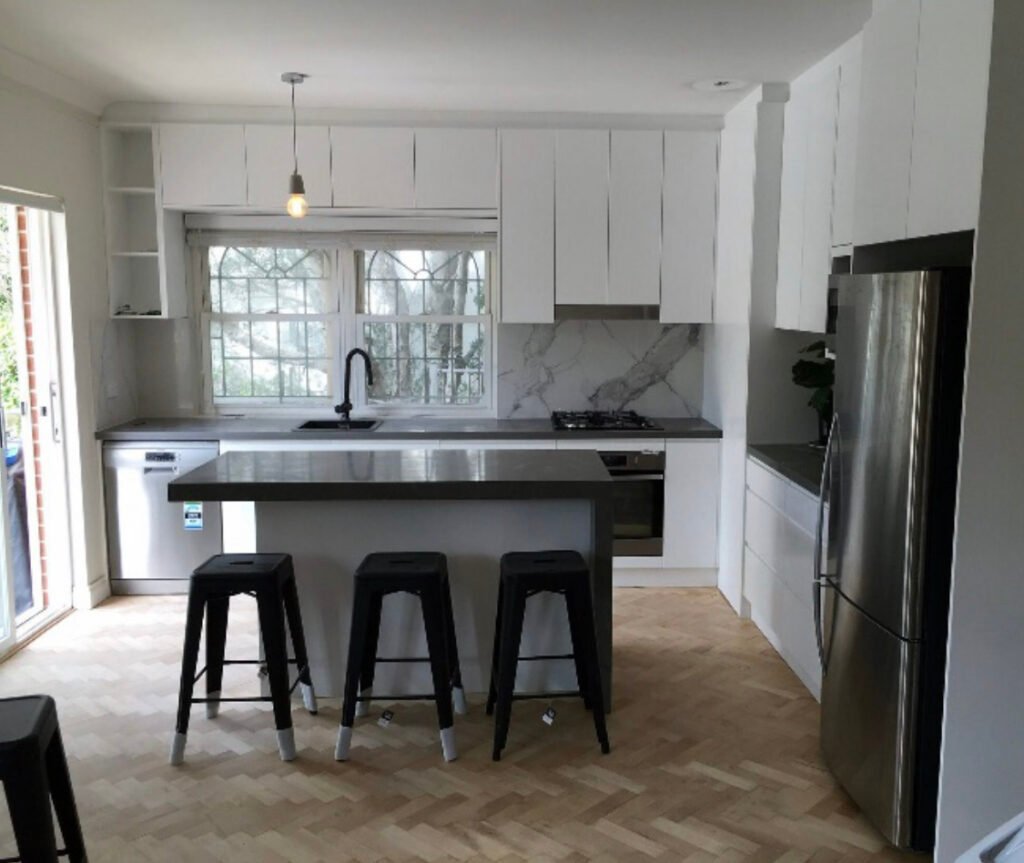
Modern kitchens commonly feature handleless or push-to-open cabinetry with flat-panel doors for a clean, uninterrupted appearance. Matte finishes in white, grey, black, and warm neutrals remain popular. Two-tone cabinetry, such as lighter upper cabinets with darker lower cabinets or a feature island, can add depth without clutter.
Storage matters just as much as style. Modern cabinetry should include pull-out drawers, corner storage solutions, built-in organisers, and pantry systems that keep the kitchen practical and tidy. Custom cabinetry often delivers the best result when a precise fit and tailored storage are priorities.
3. Premium Benchtops and Surfaces
Benchtops help set the tone for the entire kitchen. In modern design, they should combine visual appeal with durability.
Popular choices include:
- Engineered stone for consistency and low maintenance
- Natural stone, such as marble or granite for timeless character
- Porcelain surfaces for durability and resistance to heat and stains, depending on product specifications
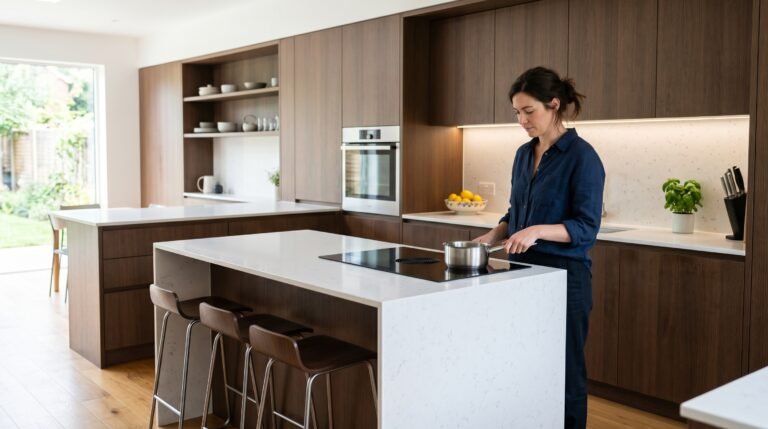
The continued use of waterfall edges, where the benchtop material extends down the side of an island, creates a seamless and refined look. Choose surfaces based on your lifestyle, maintenance preferences, and overall design palette.
4. Statement Splashbacks
The splashback is often where modern kitchens introduce visual character. Popular options include large-format porcelain tiles, natural stone slabs, coloured glass, and updated subway tiles with texture or larger proportions.
Many homeowners now prefer fewer grout lines for a cleaner finish, which is why full-slab splashbacks in stone or porcelain are increasingly popular. Your splashback should complement the benchtop and cabinetry, whether through contrast or a tonal, cohesive look.
5. Integrated and Concealed Appliances
A hallmark of modern kitchen design is making appliances blend into the cabinetry rather than dominate the room. Integrated fridges, dishwashers, and concealed rangehoods help create a seamless, furniture-style aesthetic.
Where appliances remain visible, coordinated finishes such as matte black or stainless steel can maintain a cohesive appearance. Smart additions like touchless taps, induction cooktops, and steam ovens can further improve convenience and performance.
Planning for integrated appliances should happen early in the design stage to ensure cabinetry dimensions and services are accurately considered.
6. Purposeful Lighting Design
Lighting is one of the most overlooked elements in kitchen design, yet it has a major impact on both functionality and atmosphere. A modern kitchen should include layered lighting:
- Task lighting – under-cabinet LED strips for benchtops and prep areas
- Ambient lighting – recessed downlights for general illumination
- Feature lighting – pendant lights over an island or dining area to create a focal point
Warm white tones are often preferred in Australian homes for a welcoming and natural feel. LED lighting also offers energy efficiency and flexible control options.
7. A Cohesive Colour Palette and Material Selection
Modern kitchens work best when every colour and material choice feels intentional. A common approach is to begin with a neutral base such as white, grey, or warm taupe, then introduce one or two accent tones through the island, splashback, hardware, or décor.
Natural materials like timber can add warmth through shelving, breakfast bars, or flooring and help prevent a modern kitchen from feeling too cold or clinical. Combining matte cabinetry with polished stone, brushed metal, and timber grain can create visual interest without overwhelming the space.
For a cohesive result, limit the number of core materials across the kitchen.
Bringing It All Together: Design with Intention
What separates a truly modern kitchen from a collection of trends is intentional design, where every element serves both form and function. The layout supports workflow, cabinetry supports storage, lighting supports daily tasks, and materials contribute to a unified aesthetic.
This is why working with an experienced kitchen design team can make a significant difference. Off-the-shelf solutions rarely achieve the same level of cohesion. At Modern Design Kitchens, every project is approached holistically, from the initial concept through to final installation, ensuring your kitchen is not only visually impressive but tailored to how you live.
Final Thoughts
Modern kitchen design is built on clean layouts, quality materials, custom cabinetry, smart lighting, and cohesive styling working together with purpose. Understanding these key elements helps you plan a kitchen that is both visually striking and genuinely practical for everyday living.
If you are planning a modern kitchen renovation, Modern Design Kitchens can help bring your ideas to life with expert design, premium craftsmanship, and tailored solutions for your home. Contact the team today to arrange a consultation and start planning a kitchen designed around your lifestyle.
Frequently Asked Questions
What are the key features of a modern kitchen design?
Modern kitchens focus on clean lines, minimal clutter, smart layouts, integrated appliances, and high-quality materials that balance style and functionality.
What is the best layout for a modern kitchen?
The best layout depends on your space, but popular options include L-shaped, U-shaped, galley, and open-plan kitchens with islands for better workflow.
What colours are popular in modern kitchens?
Neutral tones like white, grey, black, and warm taupe are most popular, often paired with natural wood or subtle accent colours for warmth.
Why is storage important in modern kitchen design?
Efficient storage keeps the kitchen organised and clutter-free, using solutions like pull-out drawers, pantry systems, and built-in organisers.
Are modern kitchens suitable for small spaces?
Yes, modern design works well in small kitchens by using smart layouts, space-saving storage, and light colours to make the area feel larger.